


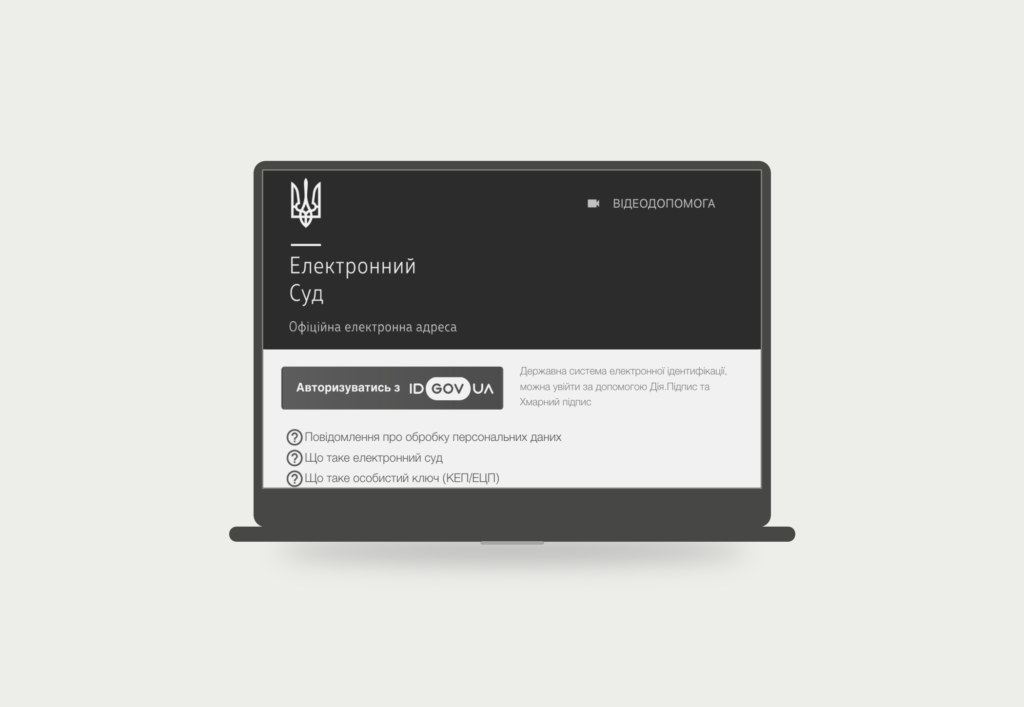
For a long time, namely starting from 02/21/2024, amendments have been made to the procedural legislation (norms of the CPC of Ukraine, the CAJ of Ukraine and the CPC (Commercial procedural code) of Ukraine), which significantly change the approaches to notifying legal entities about the stages of the trial, providing evidence, exchanging procedural documents, notifying participants about the dates and times of court hearings, etc.
Similar changes, which now provide for the unconditional obligation of business entities, including private entities, to register electronic offices (accounts) in the Unified Judicial Information and Telecommunications System (UJITS), were previously introduced for special law enforcement entities (lawyers, notaries, state and private bailiffs, arbitration managers, judicial experts, state authorities and other state bodies, local governments).
In addition, the legislation provides for a fairly wide range of consequences for violating the specified obligation. Despite the fact that fines or other forms of legal liability for failure to fulfill the specified obligations were not provided for, it should be noted that, nevertheless, the legal consequences of neglecting such obligations undoubtedly exist.
However, as our experience shows, a significant number of business representatives are not aware of the above changes or do not fully understand the possible negative scenarios that may arise as a result of failure to fulfill these obligations.
In our opinion, one of the most dangerous consequences that may arise if a legal entity fails to fulfill its obligation to register an electronic office in the UJITS is the fact that if another party to the case was obliged to register the electronic office, but did not register it, the party to the case who submits documents to the court in electronic form using an electronic office is exempted from the obligation to send copies of documents to such a party to the case. That is, in fact, a person who has not fulfilled the above obligation to register the office risks, not being aware of the sent procedural documents, becoming a victim of legal abuse by another person and learning too late about the court decisions made.
In addition, the documents of such a person, due to failure to fulfill the obligation to register the electronic account, will remain in the court without action, or will be returned, depending on the type of procedural document.
Another consequence is the inability of such person to use the convenient and operational mechanism of injunctive proceedings, in cases where this is provided for by law.
It should be noted that the indicated procedural consequences will be applied by the courts also in cases where the interests of a person who has not registered the electronic office (account) are represented by a lawyer.
Legal risks also exist in the event of improper administration of the electronic office (account) in the UJITS, if the person responsible for the administration and control of the personal office (account) of the enterprise untimely or improperly performs his duties, for example, does not notice court documents about the summons to the court session, does not accept the meaning of certain procedural documents, or untimely reports on the received documents and their content.
The direct consequences of the above may be a significant delay or even the inability to protect the interests of such persons.
It is also worth understanding that the documents or other evidence provided by the participants in the legal process using the office (account) in the UJITS, due to the peculiarities of the system, also have a display order that is not always clear to people without experience.
In connection with the above, the majority of our Office's Clients use the services of administering a person's electronic office (account) in the Unified Judicial Information and Telecommunications System (UJITS), which we provide either as part of legal outsourcing or for separate fee.


